






K Car Basics Every Driver Should Know
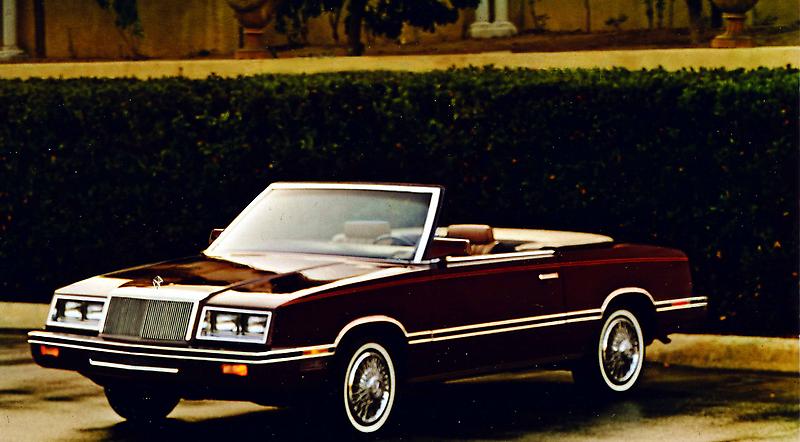
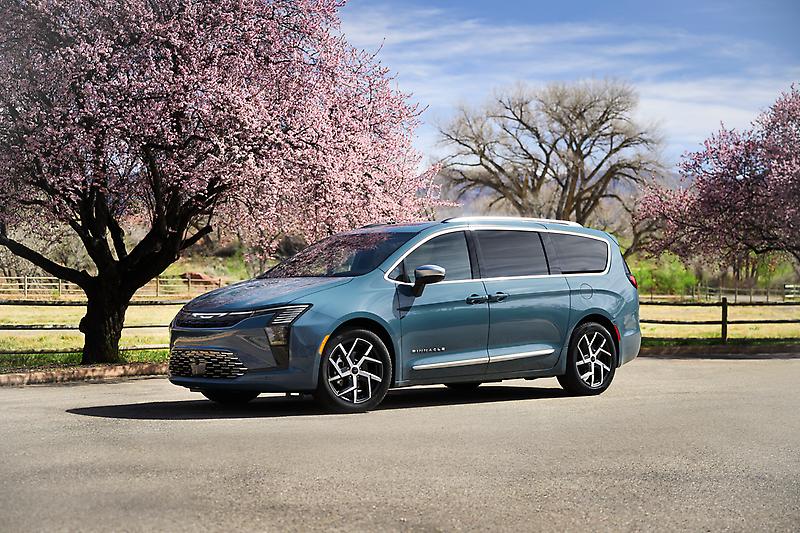
Photo Source/Copyright: Stellantis
What in the heck is a K car? Chances are you’ve heard the term before, maybe from a parent, an old television commercial, or a conversation at a car show, without ever quite knowing what it meant or why it mattered.
The answer traces back to one of the most consequential platforms in American automotive history. Chrysler launched its original K-cars in the early 1980s, when the company badly needed a success, and the design proved so triumphant that its underpinnings were stretched and adapted into a K-derived platform that went on to support the minivans Chrysler would become famous for.
Key K-Car Models
Several models wore the K-car badge and quickly came to define Chrysler’s showrooms, each tuned to a slightly different buyer.
Core Models
- Dodge Aries → one of the two original K-cars that launched the platform.
- Plymouth Reliant → the Aries’ badge-engineered twin, sharing nearly all of its components.
- Dodge 400 → a dressier midsize variant built on the same K architecture.
- Chrysler LeBaron → the platform’s reach toward attainable near-luxury.
As the platform proved itself, Chrysler kept adapting it into fresh body styles and price points, broadening its reach well beyond the original sedans.
Additional K-Derived Models
- Plymouth Caravelle → a stretched sedan derivative of the K platform.
- Chrysler New Yorker → an upscale, extended-wheelbase iteration.
- Dodge Daytona → a sports coupe on the K-derived G platform.
- Plymouth Voyager → the minivan built on the K-derived S platform.
Platform Design and Engineering
The K-car marked a real shift in how American cars were engineered, breaking from long-standing convention in several important ways.
- Transverse engine → mounted sideways to free up cabin space.
- Front-wheel drive → improved traction and more efficient packaging.
- Independent front suspension → MacPherson struts for a smoother ride and sharper handling.
- Semi-independent rear suspension → a torsion-beam setup that kept the rear light and simple.
Taken together, those choices were a sharp departure from the rear-wheel-drive, solid-axle layouts that dominated the 1970s.
The design was also built directly on lessons Chrysler had learned from its earlier L-cars, the Plymouth Horizon and Dodge Omni, which had already introduced the company to efficient front-drive packaging.
Platform Expansion and Market Impact
The platform started modestly, underpinning a small range of compact and midsize sedans and wagons, body styles that sold briskly throughout the decade. From there, it expanded aggressively, eventually serving as the foundation for nearly fifty different models, including all-wheel-drive versions.
That versatility did more than pad a catalog. It gave Chrysler and Plymouth a steady, affordable lineup at precisely the moment they needed one, and it played a central role in pulling both brands back from the financial brink.
The Importance of a Shared Vehicle Platform
Sharing a platform means building many different vehicles on the same underlying architecture, and the advantages of that approach add up quickly for everyone involved.
- Reduced engineering time → one architecture serving many models.
- Fewer unique parts → common components shared across the lineup.
- Lower production costs → economies of scale passed down the chain.
- Simpler service → easier maintenance and more affordable, widely available parts.
This marked a clear improvement over Chrysler’s earlier strategy. Before the K-car, the company spread its vehicles across several different platforms, among them the F, L, J, M, and R bodies, which shared very few common parts.
That fragmentation made tracking down the right components slower and more expensive for owners and dealerships alike, a problem the K-car was designed to solve.
External Factors: The 1970s Oil Crisis
The K-car didn’t emerge in a vacuum. The oil shortages of the 1970s had left buyers wary of any vehicle that guzzled fuel, and demand swung sharply toward smaller, more economical cars.
Japanese automakers had already moved into that space with efficient, affordable models that were winning over American drivers. Chrysler designed the K-car to meet them head-on, competing on fuel economy, price, and a sensible balance of everyday performance rather than the sheer size and power that had defined the previous decade.
Industry Influence of the K Car
The K-car’s influence reached well beyond Chrysler’s own ledgers, helping push two ideas firmly into the industry’s mainstream, where they remain standard practice.
- Front-wheel drive → adopted broadly across the industry.
- Platform sharing → established as standard manufacturing practice.
It also reinforced a rising emphasis on fuel efficiency that continues to shape how vehicles are designed today, long after the original K-cars disappeared from the road.
Chrysler’s Evolution Since the 1980s
Chrysler has changed a great deal in the decades since the K-car helped save it, and the corporation’s modern brands now each occupy a clearly distinct lane.
- Chrysler → focuses on minivans.
- Ram → centered on trucks.
- Jeep → the broadest, most varied lineup.
- Dodge → concentrated on performance models.
That breadth means there’s a fit for nearly every kind of driver and budget. Stop by to explore the current lineup in person, or browse our full selection. You might even spot a piece of K-car history along the way.
More From NYE Chrysler Dodge Jeep Ram
2026 Ram 1500 Review: Built to Last
Photo Source/Copyright: Ram Half-ton trucks don’t usually get weird. Ram’s did. Over a few short model years, the brand pulled the HEMI, brought it back, revived a supercharged off-roader, and built an honest-to-goodness muscle truck. If you’ve been eyeing a 2026 Ram 1500, the lineup looks familiar in the middle and gets wild at…
Why Choose The Jeep Compass Latitude Trim
Photo Source/Copyright: Edmunds Most car buyers assume the base trim in any vehicle lineup is the compromise tier: the version built with plain vinyl touchpoints, a tiny dashboard screen, and cold seats reserved for those who refused to spend more. Jeep Compass buyers get a completely different arrangement. The Latitude trim sits near…
Discover How a Lease Works for Cars
Photo Source/Copyright: Kelley Blue Book Leasing is now one of the most common methods of obtaining a new car, but the contract associated with it is usually written in terms that confuse more than they help. To understand how a lease works, you first need to realize that you’re paying for the portion…